Lead HRWith More Confidence;Make Better People Decisions.
Define the capabilities your organization needs, strengthen hiring decisions, and create a clearer foundation for developing people.
$29 · One-time purchase · Sign in required · No subscription.
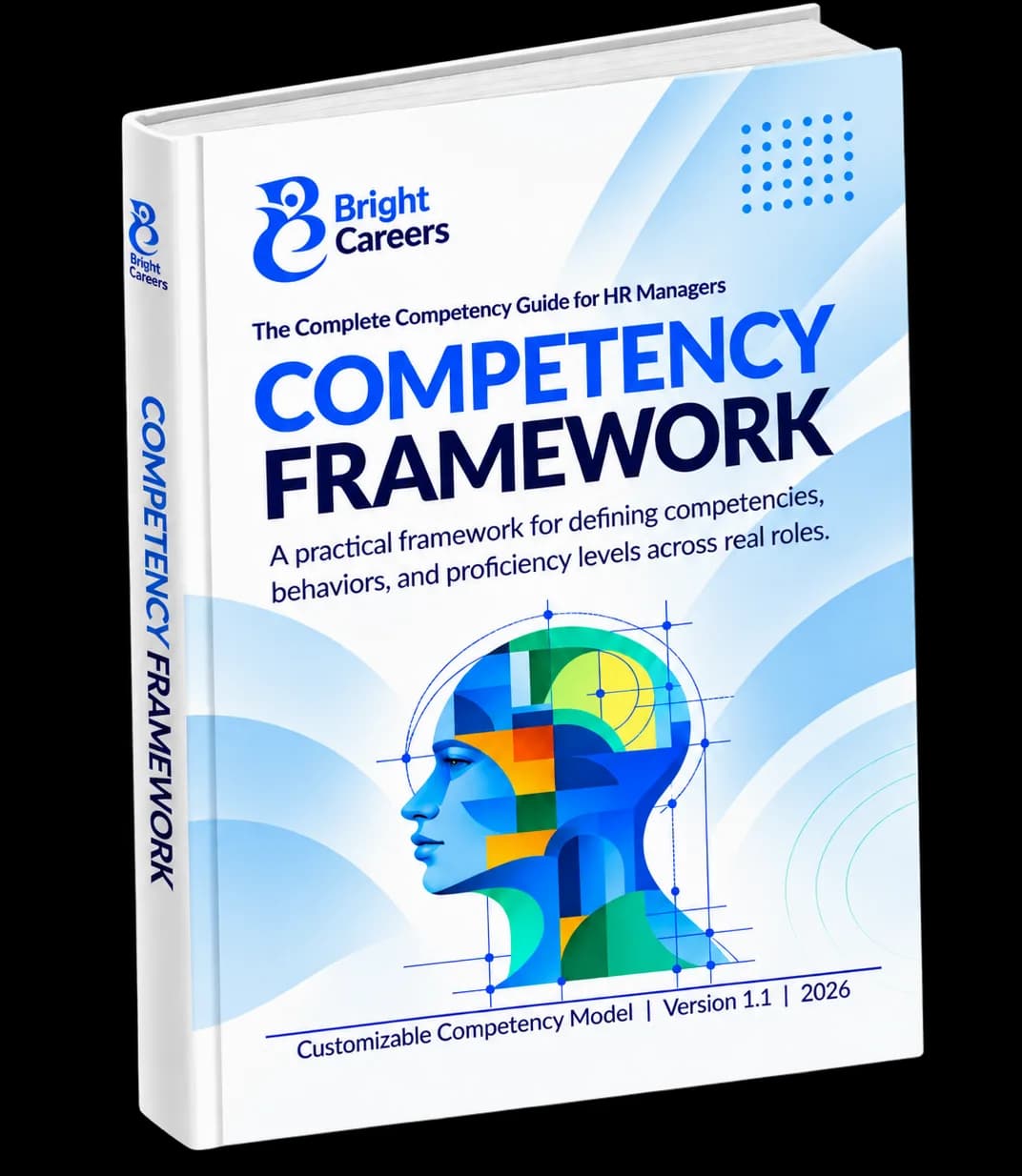
Ready to Adapt
Customize it for your organization.
Practical Framework
Competencies, levels, and role application.
One-Time Purchase
No subscription.
Built for HR Managers
Support better people decisions.
HERE'S THE REAL HR CHALLENGE
Management Relies on You to Keep HR Running.You Want to Help Shape What Happens Next.
People count on you when contracts need renewing, payroll needs finalizing, or employee information is required. You know the workforce, work closely with managers, and see where people need support.
But many of the bigger decisions happen before HR is involved. A vacancy arrives with unclear requirements. Training is requested without defining what employees need to do differently. Someone is considered for promotion while expectations for the next role remain unclear.
Then management asks the bigger question:
“What capabilities do we need to deliver our priorities, and where are the gaps?”
To answer that well, you need a clear basis for defining what roles require, what good performance looks like, and where people need support.
This is where a competency framework helps. It gives you a practical structure for turning organizational priorities into clear role expectations, development needs, and better people decisions.
Clear Expectations Give You SomethingSpecific to Work With
A competency framework describes the capabilities people need and how they demonstrate them at different levels.
For example, an HR Officer may need to explain a procedure clearly to an employee.
An HR Manager may need to present a staffing recommendation and explain its implications to leadership.
COMMUNICATION
Both roles need communication, applied to different responsibilities.
By selecting relevant competencies and levels for each role, you create expectations that managers can discuss, employees can understand, and HR can use in assessment and development.
You Do Not Have to Build the Framework From Scratch
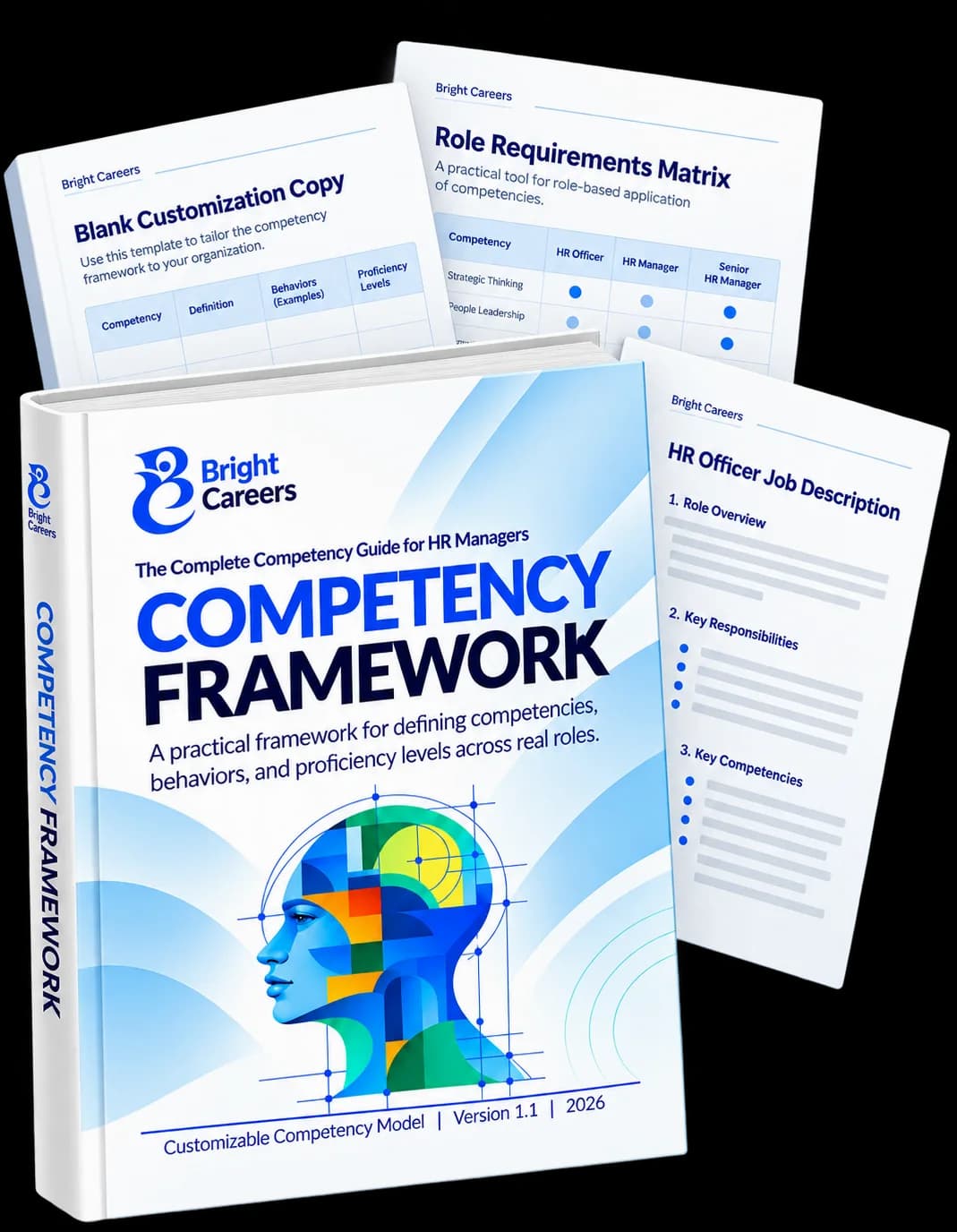
The Bright Careers Competency Framework gives you a practical guide, a ready-to-adapt model, and supporting tools for defining competencies, setting proficiency levels, translating them into clear role expectations, and applying them across recruitment, development, and other people decisions.
Review
Start with the developed model and guide.
Adapt
Adjust terminology, competencies, and expectations for your organization.
Apply
Use the framework with real roles, recruitment, development, and other people decisions.
You and your managers bring the knowledge of the work. The guide and tools give you a structured starting point.
What the Framework Includes
A Complete, Ready-to-Adapt Model
The framework brings four core elements together in one working model, so you can define the capabilities that matter, set the level required, describe what that level looks like in practice, and apply it to real roles.
Competency Structure
Core, Leadership, and Functional competencies organized in one clear model.
Four Proficiency Levels
Foundation, Proficient, Advanced, and Strategic, showing how expectations increase across levels.
Behavioral Indicators
Practical descriptions of what each competency looks like at different levels.
Role Application
A simple method for deciding which competencies and proficiency levels each role requires.
Everything You Need to Start Adapting
Competency Framework and Guide
Work from competency definitions, proficiency levels, behavioral indicators, and a method for applying them to roles.
Blank Customization Copy
Record the terminology, competencies, and expectations you adapt for your organization.
Role Requirements Matrix
Capture education, experience, technical skills, systems, and other specific job requirements.
Completed HR Officer Job Description
See how competencies and role requirements come together in a practical document.
You and your managers bring the knowledge of the work. The guide and tools give you a starting point.
$29 · One-time purchase · Sign in required · No subscription.
Let's Put the Framework Into PracticeWith an HR Officer Role
Suppose your organization wants to digitize HR services. Employees should submit routine requests online, records should be accurate, and managers should receive reliable information.
Before choosing training or recruiting, you need to establish what this change requires from the team.
Who will process the requests? What must they handle independently? How will you know they can maintain accurate records?
An HR Officer vacancy gives you a practical place to begin.
Organizational Priority
Digitize HR services
01Define What the Role Needs to Demonstrate
The officer will process digital requests, maintain records, and help employees use the service.
Using the framework, you identify Digital Fluency as relevant and consider Proficient as the required level.
Competency
Digital Fluency
Level
Proficient
You discuss the responsibilities with the manager and adapt the expectation:
Agreed Expectation
“Handles routine digital requests independently, checks information for accuracy, and recognizes when an issue needs escalation.”
You record specific HRIS requirements in the Role Requirements Matrix, alongside qualifications and experience.
You now have a clearer description of what the person needs to do.
02Use That Expectation in Recruitment
You ask candidates to process a simulated request using fictional records, identify an error, and explain how they would handle it.
The panel compares their work against expectations agreed before the assessment.
Your hiring recommendation has a basis you can explain.
03Carry It Into Development
After the person joins, suppose they process requests confidently but regularly miss errors.
The manager can identify what needs attention, agree on guidance and practice, and review whether accuracy improves.
You can bring management a specific recommendation:
Management Recommendation
“To support the digital service, the role needs to process requests independently and maintain accurate records. Our review identified a gap in checking information. I recommend focused practice and a follow-up review of accuracy.”
An organizational priority has become a role expectation, an assessment, and a development action.
The framework provides the structure. Your work with managers and the evidence you gather make the recommendation useful.

Built From Practical HR Experience
Ali Khan Firooz
HR ManagerFounder, Bright Careers16+ Years in HR
I created this guide from experience across recruitment, workforce planning, talent management, and HR operations, where I have seen how clear role expectations can strengthen hiring, development, and other people decisions.
Questions You May Have
The guide explains the structure, proficiency levels, and role application method. The developed model and completed HR Officer example give you material to work from as you learn.
Use the framework to make capability expectations more specific and consistent, strengthening the job descriptions and assessment processes you already use.
The structure can be adapted across functions. The HR Officer example demonstrates the method; functional competencies and technical requirements should reflect each department’s work.
Agreed competency expectations can support those discussions alongside objectives, results, experience, broader role requirements, and organizational policies.
Yes. Internal adaptation and use are permitted under the product’s license. Resale and redistribution are not permitted.
Bring a Clear Recommendation to Your Next People Discussion
Start with a role you already need to review. Define what the work requires, discuss the expectations with the manager, and use them to guide your next decision.
“This is what our people need to be capable of, and this is the direction I recommend.”
$29 · One-time purchase · Sign in required · No subscription.